Fairfield’s school-zone camera program is moving forward, with safety goals and spending questions both in view
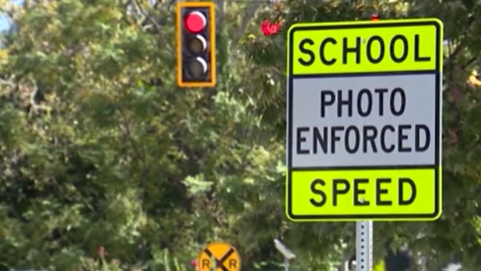
Fairfield is moving ahead with a school-zone speed-camera program under Connecticut’s automated traffic-enforcement law. The town’s plan received CTDOT approval in December 2025, and local police said this week that installation is underway, with activation possible as early as May or June. Once the cameras go live, the program must begin with a 30-day warning period before citations are issued.
Town officials have presented the program chiefly as a safety measure. The Fairfield Police Department says the cameras are intended to reduce speeding near schools “where children walk, bike, and ride every day,” and describes the effort as part of Fairfield’s Vision Zero work. That framing tracks the state law’s origin. Connecticut authorized municipal automated enforcement through Public Act 23-116, an act implementing recommendations of the Vision Zero Council.
The state structure is narrow by design. Municipalities may not place cameras wherever they choose. They must adopt a local ordinance, submit a plan to CTDOT, and justify camera locations with evidence such as crash history, traffic conditions, and safety need. State law also requires written guidance on how municipalities are to evaluate whether a device improved traffic safety at a location.
In Fairfield, the financial side of the program has also come into view. CT Insider reported on April 8 that the Board of Finance increased projected revenue from school-zone speed-camera fines in the proposed budget from $1.45 million to $2.9 million as part of a broader revision to reduce the expected tax increase. That figure is newsworthy because it is large enough to invite public skepticism about whether a safety program could also become a meaningful budget tool.
State law does limit how that money may be used, but not in a way that fully answers every policy question. Connecticut General Statutes § 14-307c requires that funds from municipal automated-enforcement fines be used for improving transportation mobility, investing in transportation infrastructure improvements, or paying the costs associated with using the devices. The statute does not define “transportation mobility” in this section, and it does not say revenue must be spent only on new school-safety projects.
That leaves room for interpretation. The law is plainly aimed at safety, especially reducing dangerous driving in places like school zones. But the spending clause is broad enough that reasonable people can debate how tightly the resulting revenue must be tied to new safety-focused transportation investments, as opposed to other qualifying transportation costs or infrastructure work. What the law does clearly forbid is treating the money as unrestricted general municipal revenue.
Fairfield’s own local record reflects that same tension. The town’s ordinance and related materials track the state framework and require annual reporting on violations and camera locations. Public town budget materials from March 2025 also referred to “qualifying expenses against speed light camera revenue” and identified $2 million in Public Works asphalt paving for streets as “a qualifying expense.” That shows the town has already treated at least some transportation-related capital or maintenance work as potentially eligible under the statute.
What does not yet appear in the public materials reviewed here is a full, current, itemized plan showing how the entire higher revenue forecast would be spent. In other words, Fairfield has publicly identified the legal categories and at least one qualifying use, but it has not yet publicly laid out a complete line-by-line allocation for the full projected amount now associated with the program.
Fairfield is not alone in working through these questions. Other Connecticut municipalities have already launched or approved similar programs, including Washington and Middletown. The clearest reported performance data so far has come from Middletown, where Hearst Connecticut Media reported this week that speed-camera enforcement cut speeding incidents by about 50 percent over nine months. That does not prove Fairfield will see the same result, but it does show the state’s program is moving from theory into measurable practice.
For Fairfield, that is likely the right standard. The debate should not turn only on revenue estimates, and it should not turn only on the town’s stated safety intent. The more useful test is what happens after activation: whether speeds drop around schools, whether dangerous driving declines, and whether the town can show that any revenue is being spent in the limited ways state law allows. Fairfield has made the safety case clearly. The next challenge will be proving the results, and accounting for the money with the same clarity.