Town Governement News Fairfield, Connecticut
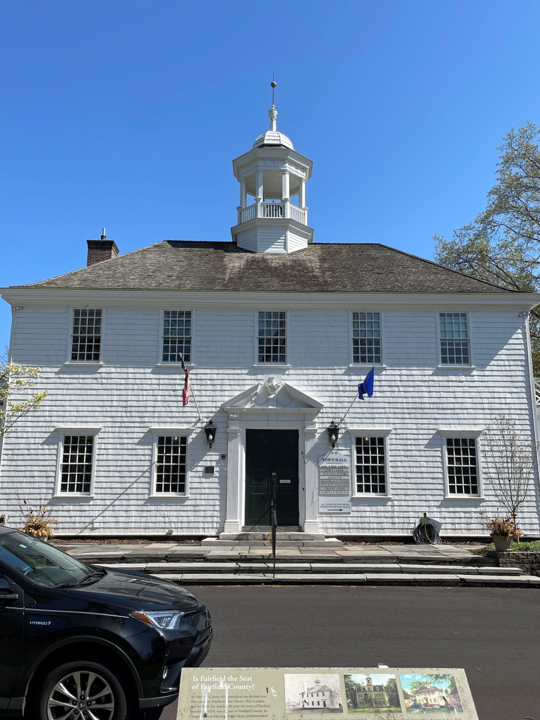
Selectpersons advance the $402.9M FY2027 budget on March 2, sending it into the finance hearing cycle
Fairfield’s proposed FY2027 budget moved forward on March 2, 2026, when the Board of Selectpersons voted to advance the $402.9 million spending plan. The practical consequence is procedural but immediate: the budget is now positioned for the Board of Finance’s hearing and deliberation sequence in March, where the proposal can be tested, amended, and ultimately recommended onward to the Representative Town Meeting.
The budget matters because it functions as the town’s annual operating authorization for the fiscal year beginning July 1, 2026 and ending June 30, 2027. For residents, the short-term impact is not only the size of the spending plan but also what it implies about taxes, contract costs, and the town’s capacity to carry rising service and capital demands without forcing disruptive cuts.
The March 2 action was significant in another way: it clarified political alignment and the boundaries of disagreement before the budget reaches the Board of Finance. When votes fall on predictable lines early in the process, it becomes easier—later—to identify what is actually negotiable (timing, phasing, reserves, staffing) versus what is structurally locked (contractual obligations, mandated services, debt service, and fixed costs).
The next step is date-certain. The Board of Finance begins its formal budget hearing cycle on March 5, 2026, with additional hearings and deliberations scheduled through the end of March. Residents who want to influence the outcome should treat the first hearings as the highest-leverage window, because they shape what questions get asked, what assumptions get challenged, and which reductions—or reallocations—become plausible before positions harden.
Sources: Town of Fairfield; local reporting.

Board of Finance opens Budget Hearing #1 on March 5, with a full March schedule through a March 31 vote
Fairfield’s Board of Finance begins its FY2027 budget hearings on March 5, 2026, initiating the stage where the proposed budget is examined in public, department by department, with the power to recommend changes before the town’s final adoption sequence.
This matters because the Board of Finance is the point in the process where residents typically get the clearest line of sight into fiscal tradeoffs: what the proposed budget assumes about wage settlements and benefits, what it does (or does not) include for capital and maintenance, what reserves are being used, and whether any growth is being pushed forward into future years.
The town’s posted Board of Finance schedule shows a structured arc:
- Budget Hearing #1: March 5, 2026
- Multiple additional hearings in mid-to-late March
- Public Budget Comment Session: March 28, 2026
- Budget deliberations: March 30, 2026
- Budget vote: March 31, 2026
The practical consequence is that Fairfield’s budget debate is no longer abstract. It is now calendar-bound, and each hearing becomes a potential decision node: a place where a question about a budget assumption can become a constraint, and where a single large line item can force a choice between tax impact and service impact.
A second governance thread is running alongside the hearing calendar: purchasing policy work. The town’s Board of Finance materials also list a Purchasing Policy Committee meeting earlier in the process, reflecting that the town is scrutinizing the rules governing how spending is executed during a period of large and complex budgets. Procurement rules are not a side story: they influence price, competition, and transparency in the spending that budget votes authorize.
The next step is straightforward and date-specific: residents who want to participate should focus on (1) the hearing dates beginning March 5, and (2) the public comment session on March 28, because those are the moments built for direct input before the Board of Finance locks its recommendation on March 31.
Sources: Town of Fairfield.
The proposed FY2027 budget frames a tax-levy increase but a lower mill rate, reflecting revaluation effects and rising costs
Fairfield’s proposed FY2027 budget totals $402.9 million, with the plan framed around two competing realities: rising costs on the spending side and a revaluation-driven shift in the tax base on the revenue side.
On the spending side, the budget is structured around core cost drivers that towns cannot easily avoid: education spending, contractual wage and benefit obligations, public safety operations, and ongoing infrastructure and service requirements. On the governance side, the budget is now moving from proposal to testing—first by the Board of Selectpersons and then through the Board of Finance hearing schedule that begins on March 5.
On the revenue side, Fairfield’s recent revaluation has increased the town’s grand list materially. The practical implication is that the town can describe a tax-levy increase while simultaneously projecting a lower mill rate—because a larger assessed-value base can produce the same (or even higher) total revenue at a lower rate. That does not mean taxes fall for every household. It means the distribution of the tax burden depends on how individual assessments changed relative to the townwide base.
Residents should treat three questions as the real substance of the budget debate:
- What is the size and composition of the education allocation relative to the Board of Education request?
- What assumptions are embedded about labor contracts and benefit costs, and how sensitive is the budget to those assumptions?
- What does the budget imply about the town’s near-term ability to absorb capital and infrastructure pressures without creating future spikes?
The next step is the hearing sequence now underway. The Board of Finance calendar through March 31, 2026 defines when residents can press for clarity on assumptions, tradeoffs, and the potential for cost containment without degrading core services.
Sources: Town of Fairfield; local reporting.