Scarcity, Growth, and the Roots of Connecticut’s Housing Debate
A failed bet on resource scarcity still shapes how communities like Fairfield think about growth, housing, and limits.
Opinion
Housing in Fairfield is expensive, scarce, and frequently contested. Proposals often meet neighbor resistance. This is true for both modest “missing middle” housing and larger multifamily developments. Objections are framed in terms of limits: road capacity, school crowding, infrastructure strain, and tolerance for change. These concerns are real. But the instinct to treat growth itself as the problem has deeper roots in an intellectual current that emerged in the late 1960s.
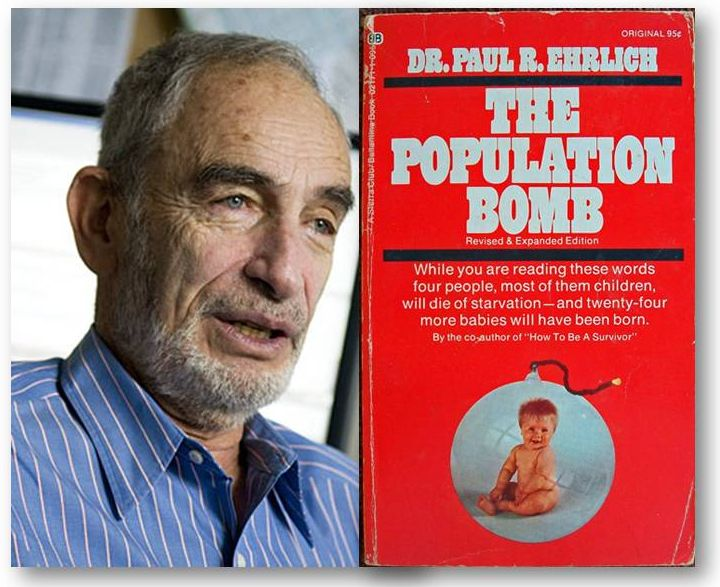
Many of these ideas trace back to Stanford biologist Paul Ehrlich, who died recently at age 93. Ehrlich was one of the most influential environmental thinkers of the twentieth century. His 1968 book, The Population Bomb, brought fears of overpopulation into the American mainstream. It warned that population growth would outstrip the earth’s resources and lead to widespread famine and social collapse. For many readers and policymakers, his message proved persuasive. It helped shape modern environmentalism and a broader skepticism toward growth.
Ehrlich’s influence rested on both his argument and its resonance. His thesis tapped into a deep human fear: running out. Food, space, water, and security all felt at risk. Scarcity, presented in stark terms, is compelling. It reduces a complex future to a simple, emotional conclusion: more people means less for everyone else. That clarity carried his message beyond academic debate into public consciousness and policy.
Ehrlich’s concern was straightforward: the planet’s resources are finite, while human populations grow exponentially. From that premise came a prediction of scarcity. For decades, this view reinforced skepticism toward growth. Population, consumption, and development were all viewed through this lens.
Confident in this view, Ehrlich in 1980 accepted a public wager from economist Julian Simon. Simon proposed a measurable test: the inflation-adjusted price of any raw materials Ehrlich selected would fall over time. Ehrlich chose five commodities: copper, chromium, nickel, tin, and tungsten. The bet was formalized in September 1980 with a ten-year horizon. Simon argued that ingenuity, innovation, and substitution would expand supply and reduce costs.
By 1990, Ehrlich had lost. Adjusted for inflation, the prices of all five commodities declined.
The result reflected a broader pattern. When resources become scarce or expensive, markets respond. New technologies emerge. Substitutes are developed. Previously uneconomic supplies become viable. Scarcity does not only constrain; it also triggers adaptation. The wager did not resolve every environmental question, but it did challenge the assumption that resource limits operate in a fixed, linear way.
As Jacob Anbinder argued in The Atlantic (March 19, 2026), Ehrlich’s influence extended beyond the accuracy of his predictions. His ideas helped shape a political mindset that treated growth not as an opportunity to be managed, but as a threat to be contained. That mindset continues to shape policy.
Nowhere is that influence more visible than in land use.
Ehrlich believed that growth inevitably strained finite resources, and that limiting growth was the prudent response. That logic translated into zoning restrictions, density limits, and opposition to new housing. Over time, these policies accumulated, constraining supply in desirable places like Connecticut and contributing to higher prices.
Across Connecticut, especially in Fairfield, local housing debates focus on the capacity of roads, schools, neighborhoods, and infrastructure. These are legitimate concerns. But they often rest on a deeper assumption: that accommodating more people will diminish what exists today. Fairfield continues to experience strong demand driven by its fundamentals. These include convenient rail access to Manhattan, a strong job market, high-performing public schools, and amenities such as its shoreline and public beaches. The same factors that attracted current residents will continue to attract future residents, intensifying growth pressure and the need for new solutions.
As commodity markets adapted to rising demand in Ehrlich’s wager, housing systems can adapt as well. They can do so through better design, more efficient land use, and incremental increases in density. When those adaptations are blocked, scarcity and inefficiency become self-imposed, often resulting in blunt instruments such as 8-30g projects or piecemeal, developer-driven text amendments.
Ehrlich’s legacy is not reducible to a lost bet. He helped elevate environmental concerns at a time when they were often ignored. Issues such as habitat loss, biodiversity, and pollution remain unresolved. Limits exist, but addressing them requires more adaptive approaches than those of the 1960s.
In the decades since Ehrlich wrote his influential book, global food production has increased dramatically. Living standards have improved across much of the world. Innovation has repeatedly expanded what is possible. These outcomes were not inevitable. They also diverged from the dire predictions of the late 1960s.
The challenge is to carry forward what Ehrlich got right, attention to environmental degradation, while avoiding what he got wrong. In housing, that means recognizing that scarcity is often a function of policy as much as nature.
Fairfield’s choices are not between growth and preservation. They concern how to accommodate change in ways that are responsible and realistic. If the past offers guidance, it is this: solutions to scarcity can be developed. That requires adopting new approaches to new problems.
Ehrlich warned of a world defined by limits. Human ingenuity has shown those limits to be more flexible than he imagined. The question for Fairfield is not whether limits exist. It is whether we understand them correctly and whether we will respond with the same capacity for adaptation that has expanded possibility elsewhere.